Sierra Leone is one of the poorest countries in the world, suffering from some of the worst maternal and child health outcomes. It has a large religious population and the religious values have merged with traditional culture to set clear definitions of health. An example of these is “noto ospitul sik”, a krio term used to describe health conditions beyond the scope of allopathic medicine. Mental Health conditions belong to these “noto ospitul sik” list of illnesses, and the narratives explaining these conditions are often linked to the supernatural.
Women and young girls in Sierra Leone have restrictive and ascribed roles to play. The religio-cultural restriction and expectation of young girls have left them vulnerable to abuse. The 1991–2002 civil war exposed them to high levels of sexual abuse and violence. This trend continued during the Ebola crisis when the shutting of schools led to a spike in sexual abuse and violence. Rape was only officially declared a national emergency in 2019.
Limited opportunities for young girls combined with their vulnerability to sexual abuse places a lot of strain on their mental health. The lack of “conventional” mental health services and the propensity to view it as supernatural issue makes them the most vulnerable to developing mental health illnesses.
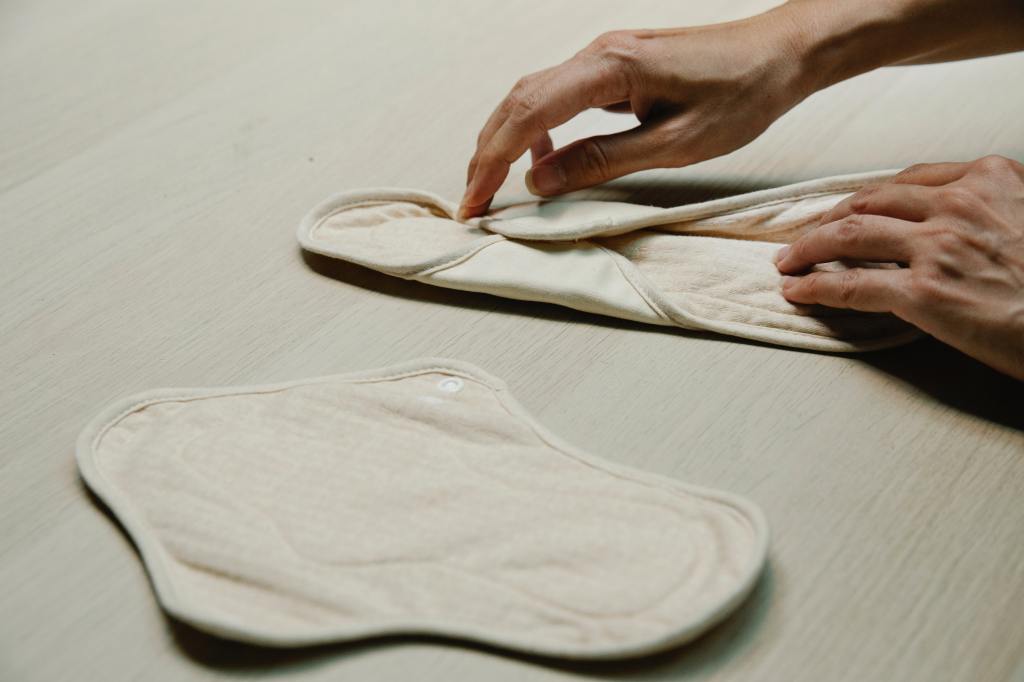
The proposed intervention is the introduction of reusable sanitary pads and community based female sexual health education sessions. The Intervention has two objectives. The first is to increase opportunities and future prospect for young women by increasing retention in schools. Data shows a drop-in girls attendance, from primary (62.9%) to secondary schools (25.1%). This is around the time young girls usually start menstruating and suggests that access to female health product is a barrier to education. The second objective is to start discussion on women and young girl’s mental health by initiating discussion on women’s health in general. Women and young girls in the community can take ownership over the intervention, as it can be done in a community setting. Local healers can also be invited to these.
Help-seeking behaviour regarding mental health in Sierra Leone is tied to visiting traditional healers. This means that intervention tackling mental health in conjunction with healthcare services are ineffective. However, the culture places an importance on a women’s role in community and empowers them to take ownership over their health – “women’s business”. This would pr ovide an opening for safe discussion around the topic of mental health.
The country has also become accepting of western education. There’s no stigma associated with education for either gender and education linked interventions are welcomed. The social support system and security at schools in addition to the increased future prospect for young girls, helps to promote their mental resilience.
The narratives around mental health do not allow for much discussion. A bottom up approach that can slowly change the culture is required. The cultural norms placed on women provide a potential avenue, which can be utilized to start discussion and address mental health suffering.
Inveen, C. (2019). Sierra Leone’s president declares “rape scourge” a national emergency | Reuters. Retrieved February 11, 2019, from https://uk.reuters.com/article/uk-leone-sexcrimes/sierra-leones-president-declares-rape-scourge-a-national-emergency-idUKKCN1PW2R2
Kids Mental Health Info.com Effective Treatments For Child Traumatic Stress – Kids Mental Health Info.com. (n.d.). Retrieved January 27, 2019, from https://www.kidsmentalhealthinfo.com/topics/child-trauma/effective-treatments-child-traumatic-stress/
Priscilla Dass-Brailsford. (2007). Models of Trauma Treatment. In A Practical Approach to Trauma: Empowering Interventions. Retrieved from https://us.sagepub.com/sites/default/files/upm-binaries/14228_Chapter3.pdf
UNGEI. (2013). United Nations Girls’ Education Initiative – Sierra Leone – Snapshot. Retrieved February 1, 2019, from http://www.ungei.org/infobycountry/sierraleone.html
Wearerestless. (2018). These girls are fighting period poverty in Sierra Leone | We Are Restless. Retrieved February 1, 2019, from https://wearerestless.org/2018/05/29/these-girls-are-fighting-period-poverty-in-sierra-leone/
Yoder, H. N. C., Tol, W. A., Reis, R., & De Jong, J. T. V. M. (2016). Child mental health in Sierra Leone: a survey and exploratory qualitative study. Int J Ment Health Syst, 10, 48. https://doi.org/10.1186/s13033-016-0080-8
 Youth MedAid